

The Beauty of Interconnectedness: Who We Are at Relational Therapy Collective
By Dr. Deborah Holt, PhD, LMFT-S, Co-Founder & Executive Director of Relational Therapy Collective
There is something remarkable about what happens when people come together with shared purpose.
One person brings a strength another may not. One insight allows us to see what another may have missed. One relationship creates safety enough for something new to emerge. One small shift changes what happens next.
And slowly, sometimes quietly, change begins to move.
This belief is woven into the very foundation of Relational Therapy Collective.
We believe that none of us exists entirely on our own. We live within relationships, families, friendships, workplaces, communities, cultures, and generations. We influence the people around us and they influence us in return. What happens within one relationship can reach another. What heals within one person can change the way they show up for the people they love.
To us, this is more than a clinical theory.
It is a way of understanding people.
It is a way of practicing therapy.
And it is the way we have chosen to bring Relational Therapy Collective to life.
How We Came to Be
Relational Therapy Collective was established from a shared belief that exceptional therapy could be both clinically rigorous and deeply human.
We envisioned a practice where excellence would never require the absence of warmth. Where clinicians could bring expertise without losing humility. Where evidence-based care and genuine human connection could coexist. And where the principles we ask our clients to cultivate in their relationships—trust, collaboration, authenticity, curiosity, accountability, compassion, and connection—would also be reflected in the culture of the practice itself.
That vision became Relational Therapy Collective.
The word Relational was intentional.
So was Collective.
Relational speaks to our belief that relationships matter profoundly: Our relationships with ourselves, our partners, our children, our parents and families, our colleagues, our communities, and the people with whom we move through life.
Collective speaks to something equally important: None of us does meaningful work entirely alone.
Our practice was built through the coming together of people with different strengths, experiences, disciplines, perspectives, and areas of expertise who share a commitment to excellent care and a belief in something larger than individual achievement.
That philosophy continues to shape who we are today.
We See People Systemically
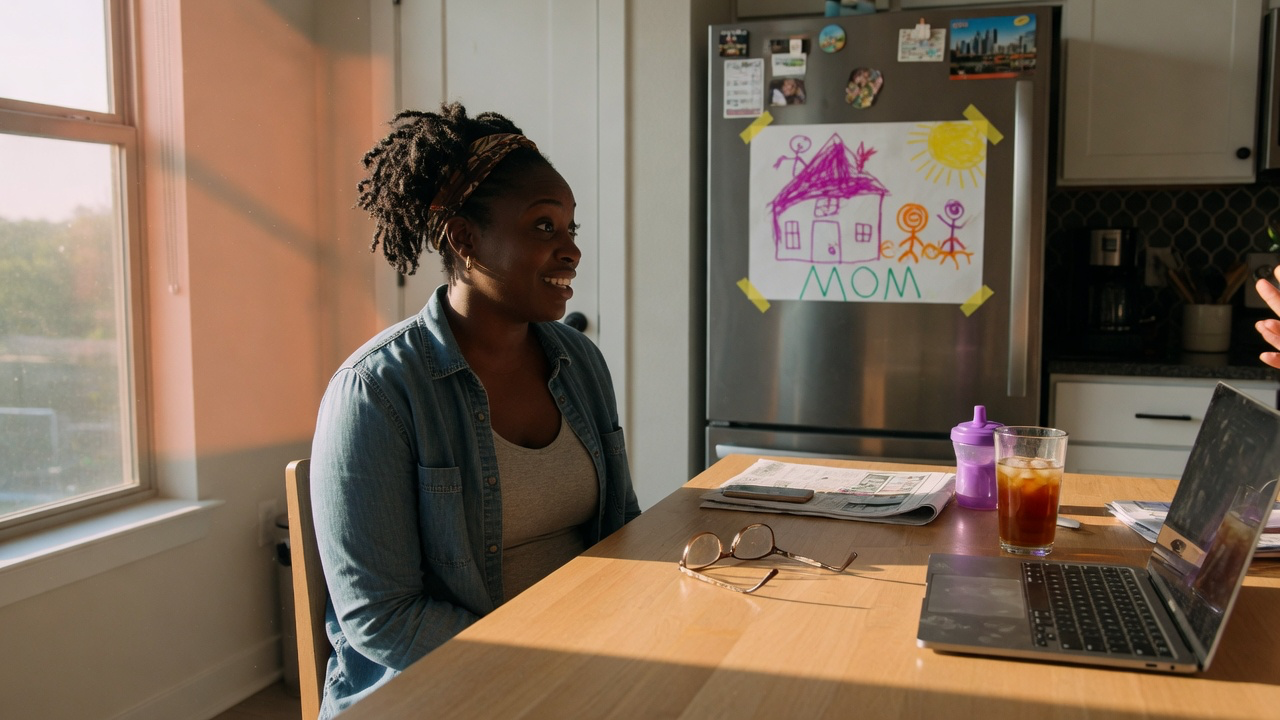
At the heart of RTC is a systemic way of seeing the world.
Family systems theory teaches us that people exist within interconnected networks of relationships and reciprocal influence. A change in one part of a system can create movement throughout the whole. Likewise, what we experience within our relationships, families, histories, cultures, workplaces, and communities can inform how we understand ourselves, relate to others, and move through the world.
This is why we resist reducing complex human experiences to isolated symptoms or simple explanations.
We want to understand the whole person.
We become curious about what happened before the symptom appeared. What relationships surround it. What patterns have developed over time. What a particular response may have once helped someone survive, protect, communicate, or endure. What strengths already exist. What has been carried across relationships or generations. And what might become possible when something within that system begins to change.
Our systemic stance allows us to hold complexity without losing sight of the human being in front of us.
Because people make more sense when we understand the context in which they live and relate.
Relationships Are at the Heart of What We Do
At RTC, we believe relationships hold extraordinary power.
They can be the places where we experience our deepest hurt.
They can also become some of the places where profound healing occurs.
This understanding informs our work with couples struggling to find one another beneath years of conflict or disconnection. It informs our work with families trying to understand patterns that have developed across relationships and generations. And it informs our work with individuals whose present experiences cannot be separated entirely from the relationships, histories, losses, strengths, adaptations, and contexts that have accompanied them throughout their lives.
Many of the couples, families, and individuals we serve are accustomed to carrying tremendous responsibility in other areas of their lives. They may be physicians caring for others, attorneys navigating complex decisions, entrepreneurs building organizations, executives leading teams, or professionals whose work requires extraordinary discipline and performance.
Achievement, however, does not make any of us exempt from being human.
Relationships can become strained. Families can become disconnected. Loss can alter even the most carefully constructed life. And people who are exceptionally capable in one area may still need a place where they do not have to have every answer.
Our clinicians may bring different areas of expertise and integrate different evidence-based approaches, but we share a common foundation: A systemic understanding of people and a deep respect for the power of relationships.
We do not believe excellent therapy means fitting every person into the same model. We believe it means understanding the person, couple, or family before us with enough depth, curiosity, and clinical discernment to provide care responsive to who they are and what they need.
The Same Philosophy Lives Within Our Walls
Perhaps one of the most important things about RTC is that our systemic philosophy does not stop at the therapy-room door.
We believe the health of a system depends, in part, on how its members are treated within it.
That includes our own.
Every clinician and team member who becomes part of RTC brings something that cannot simply be replicated by someone else: Their training, personality, perspective, lived experience, gifts, ideas, humanity, and particular way of connecting with others.
We want those differences here.
We believe a collective becomes stronger not when everyone becomes the same, but when people are able to bring their individual strengths into relationship with one another.
So we strive to create a culture in which our team members feel seen, valued, supported, challenged to grow, and trusted to contribute.
We consult. We collaborate. We learn from one another. We celebrate one another's strengths. We hold ourselves accountable to high clinical and ethical standards. And we remain students of our work, because excellence is not something we believe we arrive at once and permanently possess.
It is something we continue to practice.
For us, there is no meaningful separation between how we care for our clients and how we care for the people entrusted with caring for them.
The system matters.
All of it.
Excellence With Humanity
We care deeply about doing this work well.
Excellence is one of the core values of RTC. To us, excellence means approaching our work with integrity, intentionality, humility, and an ongoing commitment to growth. Our clinicians are committed to ongoing learning, consultation, professional development, evidence-based care, ethical practice, and thoughtful clinical work. We believe excellence is not a destination or something we simply claim—It is standard we continually work to embody in the care we provide.
We understand that many of the people who entrust us with their care occupy roles in which they are expected to lead, perform, make consequential decisions, care for others, or remain composed under significant pressure. Therapy offers a different kind of space—One where competence does not require invulnerability and where complexity can be approached with discretion, depth, and humanity.
But competence alone is not enough.
People also need to feel human in our presence.
They need spaces where complexity is welcomed. Where multiple realities can coexist. Where difficult truths can be approached with both courage and compassion. Where strengths are recognized alongside struggles. Where people are not reduced to diagnoses, mistakes, symptoms, or the most painful chapter of their lives.
This is why compassion is not separate from excellence at RTC.
Compassion strengthens it.
Curiosity strengthens it.
Humility strengthens it.
Relationships strengthen it.
We believe some of the most powerful clinical work occurs when knowledge and humanity are allowed to sit beside one another.
The Hues of Change
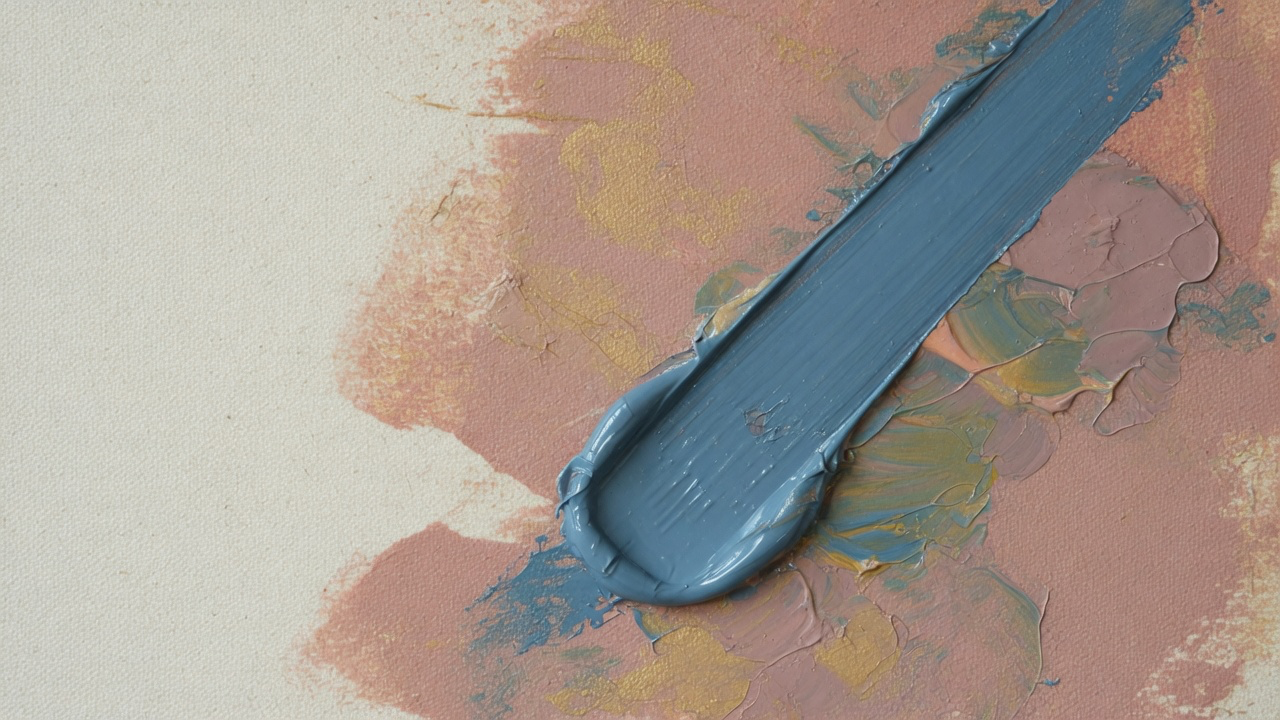
There is another reason our systemic orientation matters so deeply to us.
Within a system, change rarely belongs to one person alone. Like a new hue introduced to a canvas even a subtle shift can alter what surrounds it, changing the way the individual pieces relate to one another and, over time, changing how the whole is experienced.
We see this in our work every day.
A couple who learns to interrupt a painful cycle may create a different emotional environment within their home.
A family that develops healthier boundaries, greater understanding, and more responsive ways of relating may begin changing patterns that have existed for years.
An individual who begins responding differently to longstanding patterns may bring greater awareness into a partnership, a friendship, a workplace, or a family.
A clinician who feels supported, challenged, and valued may carry that steadiness into the room with every client they serve.
A team member who experiences genuine belonging may extend that same sense of care to every person who encounters our practice.
For someone carrying significant leadership or professional responsibility, meaningful change may also influence how they lead, communicate, make decisions, respond under pressure, care for the people who depend on them, and participate in the relationships and systems around them.
And so, the hues begin to shift.
Within a person. Between two people. Across a family. Throughout a team. Within an organization. Into a community.
We may never fully see how far meaningful change extends.
But this is the beauty of interconnectedness: When one part of a system begins to change, it can create new possibilities throughout the whole.
And it is why we believe the work that begins within the therapy room has the capacity to reach far beyond it.
Greater Than the Sum of Our Parts
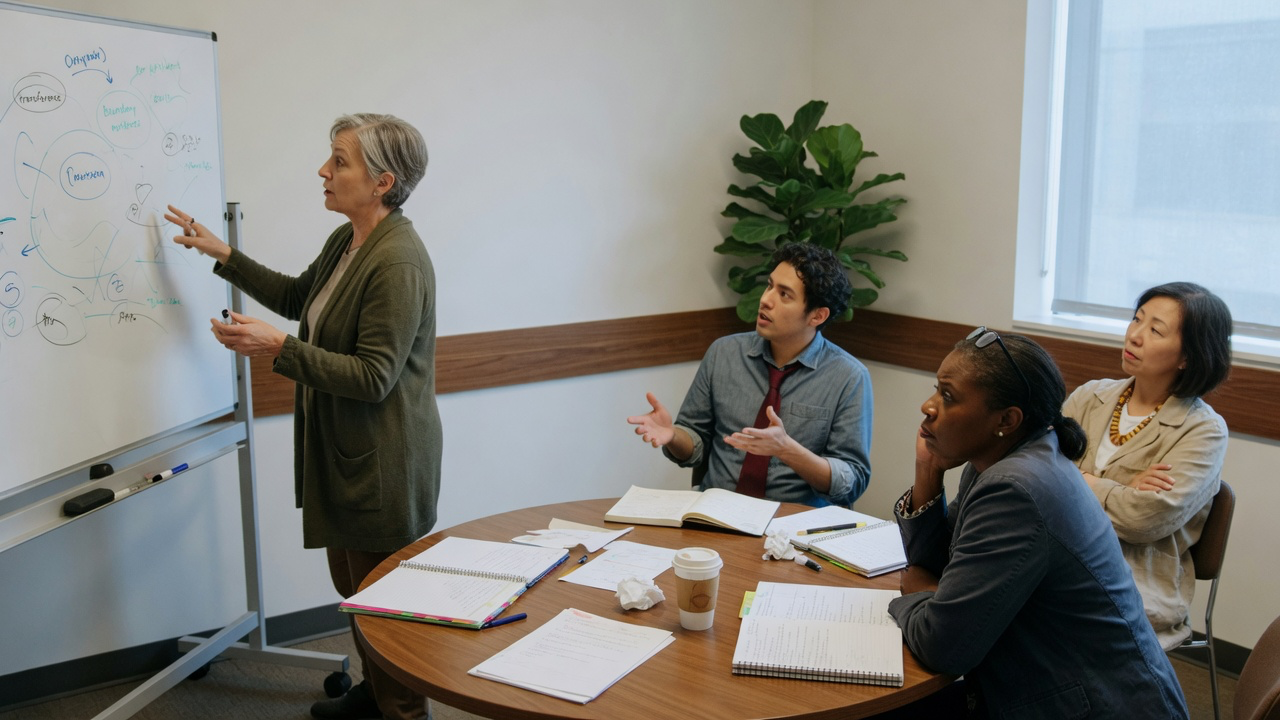
There is a principle within systems thinking that has always felt particularly meaningful to us: The whole can become something greater than what its individual parts could create alone.
It happens when two partners begin responding to one another differently and something new becomes possible between them. When a family develops greater understanding and compassion. When an individual recognizes a longstanding pattern and discovers greater freedom in how they respond.
The same principle exists within our own walls.
When clinicians come together in consultation, one insight can deepen another. When team members bring different strengths, experiences, and areas of expertise into relationship with one another, our collective understanding expands. When someone needs support, others step closer.
And somewhere within all of those individual contributions, something larger takes shape.
Relational Therapy Collective is not one person.
It is not one clinician, one theory, one discipline, one role, or one way of seeing.
It is what becomes possible between and among all of those parts.
That is the Collective.
Why This Matters to Us
We do not believe therapy exists only to make symptoms disappear.
We believe in creating the conditions for deep-rooted healing, meaningful growth, and lasting change.
And because we think systemically, we understand that meaningful change rarely belongs only to the person who begins it.
It moves.
Into marriages and partnerships.
Into families and friendships.
Into workplaces and communities.
Into the ways people lead, love, repair, communicate, set boundaries, extend compassion, and care for the relationships entrusted to them.
This is the hope woven into our work.
That a couple who learns to reach for one another differently may create a different emotional environment within their home. That a family who begins relating with greater understanding may change patterns that have existed for years. That an individual who develops greater awareness and choice may carry those changes into every relationship and system they are part of. That a clinician who feels supported and challenged to grow may bring greater presence and thoughtfulness to every person who sits across from them.
And that, collectively, these changes may reach places we will never fully see.
This is why the work matters to us.
Not because change is simple.
Not because healing follows a perfectly straight line.
And not because we believe therapy can remove every difficult part of being human.
It matters because human lives are interconnected.
What happens between two people can change what happens within a family. What changes within a family can influence what is carried forward. What changes within an individual can alter how they show up in a relationship, a workplace, a team, or a community.
And sometimes, something that begins quietly in a therapy room becomes part of something much larger.
A conversation changes.
A pattern softens.
A relationship repairs.
A family begins relating differently.
A leader brings greater awareness into the systems they influence.
A clinician carries what they have learned into the next room.
And the composition begins to change.
This is who we are.
A collective grounded in excellence, relationships, and compassion.
A practice rooted in systemic thinking and shared humanity.
A team that believe clinical competence and genuine human connection belong together.
And a collective of people who believe that when we care deeply for the person, the relationship, and the systems surrounding them, the impact of that care can extend far beyond what any of us may ever full see.
We may never know every relationship touched, every pattern changed, every family strengthened, every person who experiences something different because someone before them chose to do something differently.
Perhaps that is part of the beauty of this work.
We do not have to see the full reach of meaningful change to believe in its possibility.
We simply have to understand that none of us exists in isolation.
We belong to one another in ways both visible and unseen.
And what one part of a system begins to heal, grow, or change, something new becomes possible throughout the whole.
That is the beauty of interconnectedness. And that is the heart of Relational Therapy Collective.